
 By
By 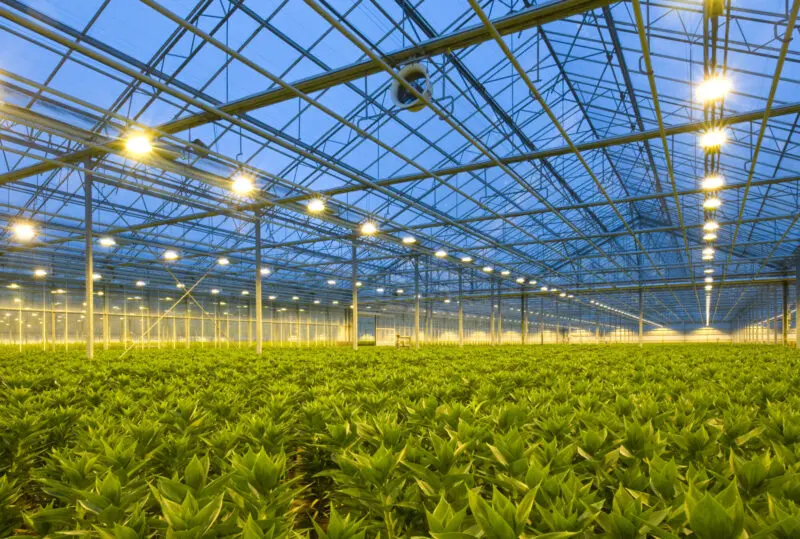
New greenhouse growing methods from Dutch experts and scientists at Wageningen University are changing how crops are managed. These ideas are called Growing by Plant Empowerment (GPE). Cannabis greenhouse production optimization Instead of controlling only air temperature and humidity, this method focuses on how plants actually use energy, water, and sugar.
Many greenhouse cannabis growers struggle with uneven quality and weak plants. GPE offers a plant-centered way to fix those problems.
Focusing on the Plant
Traditional greenhouse systems aim for fixed temperature, humidity, and VPD numbers. GPE works differently. It treats the plant as a physical object that follows the laws of energy. It manages three balances at the same time:
• Energy balance
• Water balance
• Sugar (assimilates) balance
These three systems are controlled by the plant’s stomata, the tiny pores in leaves. When stomata stay open, plants can absorb CO₂ and release water vapor, which boosts photosynthesis. GPE is really about keeping stomata open and active.
The Effectiveness
Cannabis responds well to tomato greenhouse temperatures and rose-style lighting systems. Many large cannabis greenhouses are being built in North America, yet many growers report weaker results compared to indoor rooms. GPE helps improve uniformity, quality, and disease resistance while also saving energy.
Growing Based on Light, Not Fixed Temperatures
Instead of holding one temperature all day, GPE adjusts temperature based on the Daily Light Integral (DLI). When light increases, temperature is raised to match it. This keeps the ratio of heat to light steady so plants stay in balance.
During bright days, instead of cooling the greenhouse, heat and humidity are allowed to rise so plants keep stomata open and absorb CO₂. Under strong light and CO₂, most crops perform best around 86°F.
Keeping Water and Nutrients Flowing
Evaporation from leaves must continue both day and night. At night, warm air currents or heating pipes supply the energy needed for this process. Irrigation is triggered by total energy flow, not light alone, so plants always have enough water and calcium moving to their growing tips.
Without night airflow, pressure builds inside the plant, damaging cells and creating openings for disease. GPE prevents this by encouraging night evaporation.
Balancing Sugar Production and Use
Light helps plants create sugar, while heat helps turn sugar into growth. If too much sugar is stored instead of used, photosynthesis slows. GPE keeps sugars moving into flowers, roots, and stems instead of turning into starch.
Growers use light sensors to estimate DLI and adjust daily temperatures. A simple formula is used:
Target Temp = 18 + (2 × DLI ÷ 10)
Plant Load
Plant load means how many plants and flowers share the available sugars. Too many flowers with high heat can reduce yield. GPE recommends fewer plants with warmer temperatures for better quality and uniformity.
Conclusion
Plant Empowerment is changing greenhouse growing by shifting control from air numbers to plant needs. Consistent strategies can help growers produce healthier crops, stronger flowers, and more consistent yields even in challenging greenhouse conditions.








Comments