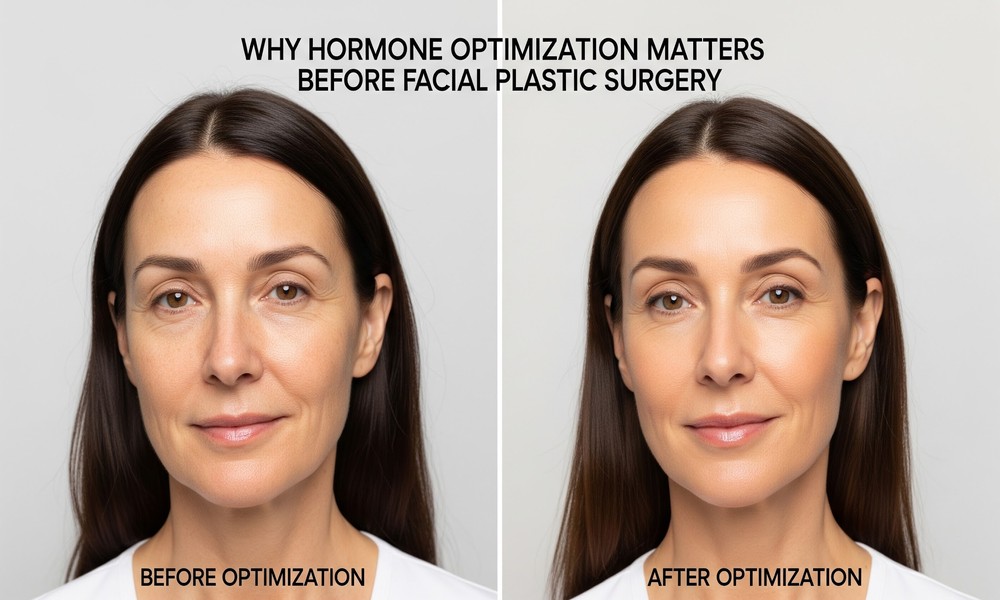

Facial plastic surgery is often viewed through a structural or aesthetic lens-reshaping tissue, correcting anatomy, or restoring balance. Yet beneath these visible changes lies a complex biological process that determines how well the body heals, adapts, and recovers. Hormonal balance plays a central role in this process, influencing inflammation, circulation, collagen production, and tissue repair.
When hormones are dysregulated, even technically successful procedures can be accompanied by prolonged swelling, delayed healing, or unpredictable recovery patterns. Understanding the relationship between hormone health and surgical outcomes allows patients and providers to take a more comprehensive approach-one that prioritizes healing capacity, resilience, and long-term results.
The Physiology of Healing After Facial Surgery
Healing is not a passive event; it is an orchestrated physiological response involving immune signaling, blood flow, cellular regeneration, and tissue remodeling. After facial surgery, the body initiates inflammation to protect the area, followed by repair processes that rebuild skin, connective tissue, and blood vessels.
Hormones such as cortisol, estrogen, testosterone, thyroid hormones, and growth factors influence each stage of this cascade. When these hormones are balanced, inflammation resolves efficiently, and tissue repair progresses smoothly. When they are not, the body may remain in a prolonged inflammatory state or struggle to regenerate tissue effectively.
This explains why two patients undergoing similar procedures can experience dramatically different recoveries. Surgical technique matters, but the internal environment in which healing occurs is equally important.
Inflammation, Swelling, and Hormonal Influence
Post-surgical swelling is a normal part of recovery, particularly in facial procedures where blood supply and lymphatic drainage are highly active. However, excessive or prolonged swelling can interfere with healing and delay final results.
Hormones directly affect inflammatory signaling and fluid balance. Elevated cortisol from chronic stress, for example, can impair immune regulation and prolong inflammation. Thyroid imbalances may slow metabolic activity, affecting how quickly tissues regenerate. Sex hormones influence vascular integrity and lymphatic flow, both of which are essential for reducing swelling.
When hormone levels are stabilized before surgery, the body is better equipped to regulate inflammation, clear excess fluid, and progress through recovery without unnecessary delays.
Tissue Repair, Collagen, and Skin Integrity
Facial surgery relies heavily on the body’s ability to rebuild collagen and connective tissue. Collagen provides strength, elasticity, and structure to the skin, and its production is hormonally mediated.
Estrogen supports collagen synthesis and skin hydration, while testosterone contributes to tissue strength and repair. Growth hormone and thyroid hormones influence cellular turnover and protein synthesis. Deficiencies or imbalances in these systems can lead to fragile tissue, delayed wound closure, or suboptimal scar formation.
Clinics such as Lions OpTimal Health, which focus on hormone health and hormone replacement therapy, often emphasize the importance of optimizing the internal environment before surgical stress. When hormone levels support collagen production and cellular repair, patients may experience smoother healing and more stable long-term outcomes.
Nasal Health, Airflow, and Surgical Recovery
Facial plastic procedures involving the nose-such as rhinoplasty-are uniquely influenced by nasal and sinus health. Inflammation within the nasal passages can affect breathing, sleep quality, and oxygen delivery, all of which play roles in recovery.
Hormonal imbalances can contribute to chronic nasal congestion, mucosal swelling, or sinus inflammation. Thyroid dysfunction, for example, may alter mucosal thickness and immune response, while cortisol imbalance can exacerbate inflammatory conditions.
From a surgical perspective, addressing nasal health before intervention can support better airflow and post-operative comfort. Providers such as Kimball Health Services, which offer ENT care and sinus treatment, often evaluate nasal function as part of broader health assessments. Optimizing these factors before surgery supports both procedural success and patient comfort during recovery.
Stress Hormones and Surgical Outcomes
The psychological stress associated with surgery is not merely emotional-it has measurable hormonal effects. Elevated stress hormones can suppress immune function, increase inflammation, and impair wound healing.
Patients with chronic stress, sleep disruption, or adrenal dysregulation may enter surgery with already elevated cortisol levels. This can increase susceptibility to post-operative fatigue, prolonged swelling, or delayed tissue repair.
By addressing stress physiology alongside surgical planning, patients may reduce these risks. Hormone optimization strategies that stabilize cortisol rhythms and support adrenal function can create a more favorable healing environment.
Facial Surgery Planning and Whole-Body Readiness
Successful facial plastic surgery involves more than surgical precision; it requires careful patient preparation. This includes evaluating metabolic health, immune resilience, and hormonal balance well before the procedure.
At practices such as North Texas Facial Plastic Surgery, where facial plastic surgery and rhinoplasty procedures are performed, surgical planning often emphasizes patient safety, anatomical considerations, and recovery expectations. When patients arrive at surgery hormonally balanced, their bodies are better positioned to respond predictably to surgical intervention.
This integrated perspective shifts surgery from a single event to part of a broader health journey-one that aligns physical changes with internal readiness.
Peptides, Regeneration, and Recovery Support
Beyond traditional hormone replacement, emerging therapies such as peptides are increasingly discussed in the context of tissue repair and recovery. Certain peptides are involved in signaling pathways that regulate inflammation, angiogenesis, and cellular regeneration.
When used appropriately, peptide-based recovery strategies may support healing efficiency and tissue resilience. In settings that emphasize peptide recovery approaches, such as Lions OpTimal Health, these therapies are often considered as part of a comprehensive plan rather than standalone solutions.
While not a substitute for surgical skill or proper medical evaluation, regenerative support strategies reflect the growing recognition that recovery is a biologically active process influenced by internal signaling systems.
Coordinating Care Across Disciplines
Hormone optimization before facial plastic surgery often requires collaboration across medical specialties. Primary care providers, hormone specialists, ENT clinicians, and surgeons each contribute valuable insights into patient readiness and risk mitigation.
For example, addressing sinus inflammation or nasal obstruction prior to surgery may involve ENT evaluation, while hormone assessment may identify thyroid or adrenal imbalances that could affect healing. Coordinated care reduces the likelihood of overlooked factors that could complicate recovery.
This collaborative approach underscores the importance of treating the patient as a whole, rather than isolating surgical care from broader health considerations.
Patient Education and Expectation Management
Understanding the role of hormones in healing empowers patients to participate actively in their surgical preparation. When individuals recognize that recovery depends not only on the procedure itself but also on internal health, they are more likely to engage in pre-operative optimization.
Education around sleep, nutrition, stress management, and hormone health helps set realistic expectations and reduces anxiety around recovery timelines. Informed patients are better equipped to recognize normal healing patterns versus signs that warrant follow-up care.
This shared understanding strengthens the partnership between patient and provider, supporting smoother recovery and long-term satisfaction.
Conclusion: Healing Begins Before Surgery
Facial plastic surgery does not begin in the operating room-it begins in the body’s internal environment. Hormonal balance shapes how tissues respond to surgical stress, regulates inflammation, and rebuilds structure. When hormones are optimized, healing becomes more efficient, swelling is more controlled, and recovery is more predictable.
By integrating hormone health into pre-surgical planning, patients and providers can support outcomes that extend beyond appearance alone. This whole-body approach reframes facial surgery as not just a cosmetic intervention, but a coordinated effort to align physiology, function, and long-term well-being.